

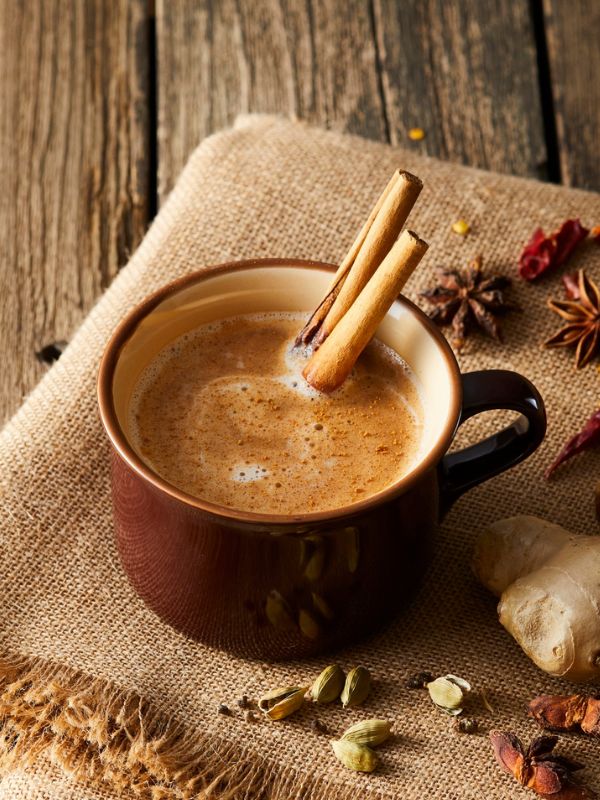
What is a Chai Latte?
A chai latte is a spiced black tea drink combined with steamed milk. It is made from black tea brewed with warming spices like cinnamon, cardamom, ginger, and clove. Despite the word "latte" in the name, it contains no coffee unless ordered as a dirty chai.
A chai latte (CHY LAH-tay) is a tea drink, not coffee. The base is spiced black tea, and espresso is added only when you order a dirty chai.
What It Tastes Like
A chai latte is sweet and gently spiced. Cinnamon, cardamom, ginger, and clove blend with black tea and steamed milk to create a smooth, aromatic drink.
That makes it a common café choice for people who want a milk-based drink without espresso.
Served hot, the spices feel richer and more aromatic. Served iced, the flavors become lighter and more refreshing while still noticeably spiced.
💡 Behind the Cup
Traditional masala chai is made by brewing black tea with spices like cinnamon, ginger, cardamom, clove, and star anise, often with milk and sugar. In India, where masala chai has deep roots, chai simply means "tea." The café drink English speakers call a "chai latte" is a Western café version of masala chai.
Most Western cafés use a prepared chai concentrate so the flavor stays consistent and easy to combine with milk. The concentrate is mixed with steamed milk, often in roughly equal parts, to create the latte.
Because the drink is built on spiced tea rather than roasted coffee, it usually tastes sweeter and less bitter than espresso-based drinks.
How Much Caffeine Is in a Chai Latte?
A 250 ml (≈8.5 oz) chai latte typically contains 40–70 mg of caffeine from the black tea, depending on the tea strength, concentrate, and serving size. Larger café chai lattes can contain more.
Because chai is made with black tea rather than coffee, it usually has less caffeine than a coffee drink of the same size. Tea also contains L-theanine (el-THEE-uh-neen), an amino acid associated with calm alertness, which may make the caffeine feel gentler for some people.
For a broader caffeine comparison across café drinks, see the Caffeine Guide.
How to Order
Simple version:
"I'll have a chai latte, please."
With customization:
- "Can I get an iced chai latte?"
- "I'd like a chai latte, half sweet."
- "Chai latte with oat milk, please."
- "Dirty chai, please." (adds a shot of espresso)
Note: Most chai lattes are pre-sweetened. Asking for "half sweet" or "fewer pumps of chai" reduces sweetness.
Customize It
Sweetness
Most café chai lattes are sweet by default, especially when made with pre-sweetened chai concentrate.
- Half sweet / fewer pumps of chai = less concentrate
- Less concentrate usually means less sweetness, but also milder tea and spice flavor
See sweetness options
Milk
Whole milk creates the creamiest texture. Oat milk pairs well with the spices and adds natural sweetness. Almond milk creates a lighter texture.
See milk choices.
Add Coffee (Dirty Chai)
A dirty chai adds a shot of espresso, combining warm spices with coffee depth. See the full dirty chai guide.
Temperature
- Hot = fuller spice aroma
- Iced = lighter, with a cooler finish
Common Confusion
Is a chai latte coffee or tea?
A chai latte is tea. It is built on black tea and spices combined with steamed milk. There is no coffee in a standard chai latte. Espresso is only added if you order a dirty chai.
Is there coffee in a chai latte?
No. A standard chai latte contains no coffee. The base is spiced black tea. If you want coffee in the drink, ask for a dirty chai.
Does a chai latte have milk?
Yes. A standard chai latte is made with steamed milk combined with spiced black tea. You can request dairy alternatives like oat, almond, or soy milk.
How is a chai latte different from a latte?
A chai latte uses spiced tea instead of espresso. It has no coffee flavor and leans sweeter and more aromatic, while a latte is built around espresso.
Why do people say "chai tea"?
"Chai" already means tea in Hindi, so "chai tea" technically repeats the word. In English-speaking cafés, chai latte refers to spiced tea with milk.
📌 Good to Know
Chai lattes are usually sweet by default because most cafés use a pre-made chai concentrate that already contains sugar. The sweetness isn't just for flavor — it also balances the natural tannic edge of the black tea and the sharper notes of ginger and black pepper in the spice blend.
If you ask for "half sweet" or "fewer pumps of chai," the barista usually pours less concentrate rather than skipping the sweetener entirely. That reduces the sugar, but it also reduces the spices, so the drink may taste milder overall. A completely sugar-free chai latte is hard to order at most cafés because the sweetness is built into the concentrate itself.
If you want stronger spice flavor with less sweetness, asking for less concentrate and an extra dusting of cinnamon on top is one workaround. Some specialty cafés brew chai from whole spices instead of concentrate — those versions allow much more control over sweetness, but they're less common.
Try Next
If you enjoy tea-based drinks, try a matcha latte for a green tea flavor and creamy texture. For a similar drink with added coffee depth, explore a dirty chai.