

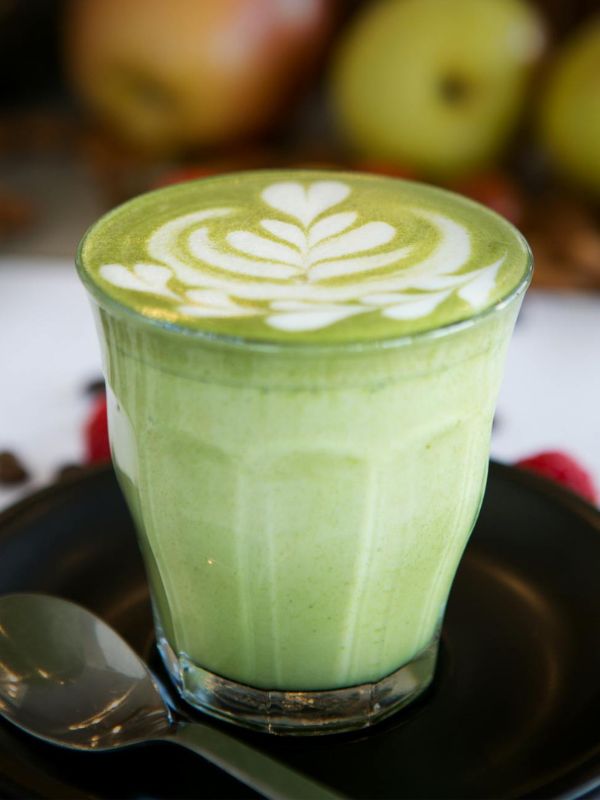
What It Is
A matcha latte is a creamy green tea drink made by whisking finely ground matcha powder directly into steamed milk. Unlike standard green tea, which is made by steeping leaves and then removing them, a matcha latte uses the entire tea leaf suspended in the liquid.
The result is a full-bodied, opaque drink with a vibrant green color, a smooth and slightly vegetal flavor, and no coffee.
What It Tastes Like
A matcha (MAH-chah) latte is smooth, creamy, and vibrantly vegetal, with a fresh green tea flavor that feels richer than regular brewed tea.
Because the entire tea leaf is ground into a powder and whisked into the drink, the flavor is full and rounded. Many people notice a natural sweetness and a subtle savory depth often described as umami (oo-MAH-mee).
Served hot, matcha tastes smoother and more rounded. Served iced, it tastes brighter while keeping its creamy texture.
Compare matcha and hojicha side by side: Matcha Latte vs Hojicha Latte.
💡 Behind the Cup
Most tea — and coffee — is made through extraction, where water pulls flavor from leaves or grounds and then leaves them behind.
Matcha works differently. The tea leaves are ground into an ultra-fine powder and whisked directly into the drink, meaning nothing is filtered out.
This is why matcha looks opaque and creamy instead of clear. You're drinking the whole leaf suspended in liquid, not a brewed infusion.
Shade-growing the tea plants before harvest deepens matcha's flavor and contributes to its smooth, slightly savory character.
Matcha is also sensitive to temperature. Water that is too hot can create a bitter taste, so it is typically prepared around 175°F (80°C) to preserve its smooth, naturally sweet flavor.
Before whisking, the powder is often sifted to break up clumps, which helps create a smoother, more even texture.
The Tool: The Chasen
While many modern cafés use electric frothers for speed, the traditional way to prepare the matcha base is with a chasen (CHAH-sen).
This bamboo whisk is carved from a single piece of wood into 80–100 fine prongs. Its specific shape is designed to create a suspension rather than a solution, ensuring the tea powder is evenly aerated and clump-free. Using a chasen is the best way to achieve a light, creamy foam.
How to Order
Simple version:
"I'll have a matcha latte, please."
With customization:
- "Can I get an iced matcha latte?"
- "I'd like a matcha latte, lightly sweetened."
- "Matcha latte with oat milk, please."
Note: Many cafés lightly sweeten matcha lattes by default. If you prefer pure matcha flavor, ask for "unsweetened" or "no syrup."
Customize It
Sweetness
- Standard = lightly sweetened
- Unsweetened = more traditional and vegetal
- Vanilla matcha = sweeter and more dessert-like
See sweetness guide.
Milk
- Whole milk = richest texture
- Oat milk = complements matcha's natural sweetness
- Almond milk = lighter and slightly nutty
See milk options.
Temperature
- Hot = smoother and more rounded
- Iced = brighter and very popular
Nutrition (Approximate)
A standard 250 ml (8.5 oz) matcha latte varies depending on how it's prepared, but most fall within this range:
| Measure | Amount |
|---|---|
| Calories | ~120–180 |
| Sugar | ~12–20g |
Most of the sugar in a café matcha latte comes from added sweeteners or the milk itself. Pure, unsweetened matcha contains virtually no calories or sugar.
Common Confusion
"How is this different from green tea?"
| Matcha | Green Tea |
|---|---|
| Powder whisked into drink | Leaves steeped then removed |
| Opaque appearance | Clear liquid |
| Fuller body | Light texture |
| More concentrated tea flavor and caffeine | Lighter tea flavor and usually less caffeine |
Regular green tea is steeped and removed from the water. Matcha is powdered tea whisked directly into the drink, making it more concentrated in both flavor and caffeine experience.
"Is a matcha latte a tea?"
Yes. Matcha is a finely ground green tea, so a matcha latte is technically a tea drink — just prepared by whisking the powder into milk instead of steeping leaves.
"Is it sweet?"
Most café matcha lattes are lightly sweetened by default with simple syrup or vanilla. The matcha itself is not sweet — it is naturally vegetal with a hint of umami. Ask for "unsweetened" if you prefer pure matcha flavor.
"Is it caffeinated?"
Yes. A 250 ml (≈8.5 oz) matcha latte typically contains 60–80 mg of caffeine, depending on how much matcha powder is used.
"Is there coffee in a matcha latte?"
No. It's entirely tea-based unless you order a dirty matcha, which adds espresso.
"What kind of matcha do cafés use?"
Many cafés use a blend designed specifically for lattes. While high-end ceremonial matcha can be too delicate and lower-grade matcha can taste bitter, latte-focused blends are made to balance well with milk while keeping a smooth flavor and vibrant color.
"Why is it so green?"
The vibrant color comes from shade-grown tea leaves. Bright green usually signals fresher, higher-quality matcha.
📌 Good to Know
Matcha often feels different from coffee, even though it contains caffeine. That's because it also contains L-theanine (el-THEE-uh-neen), a naturally occurring compound in tea.
The presence of L-theanine leads to a more gradual caffeine release compared to the quicker spike of espresso. This results in a steadier, more sustained energy often described as a focused calm, though the exact effect varies by person.
Compare
Compare matcha and hojicha side by side: Matcha Latte vs Hojicha Latte.
Try Next
If you enjoy tea-based drinks, try a chai latte for warm spices instead of vegetal notes, or a hojicha latte for a roasted, lower-caffeine alternative. If you're curious about espresso drinks, a latte offers a similar creamy texture with coffee instead of tea.