

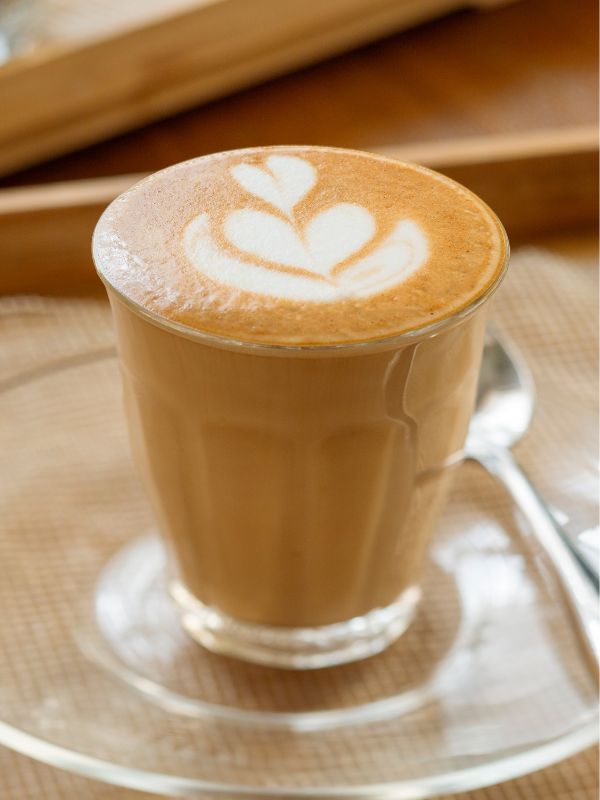
What It Is
A latte is an espresso-based drink made with one or two shots of espresso and a large amount of steamed milk, topped with a thin layer of microfoam. The milk softens the espresso, creating a smooth, balanced flavor that is less intense than a cappuccino or flat white.
What It Tastes Like
The flavor is smooth and balanced, with the milk softening the intensity of the coffee.
Compared to drinks like a cappuccino or flat white, a latte has a lighter, less concentrated coffee flavor because of the higher milk ratio.
The result is a creamy, milk-forward drink where the espresso adds depth without overpowering the milk.
💡 Behind the Cup
A typical latte uses 1–2 shots of espresso (ess-PRESS-oh) combined with steamed milk in a ratio of about 1:3 to 1:5, plus a thin layer of foam.
The milk is textured using a steam wand — an espresso machine nozzle that heats milk — to create microfoam, a fine, velvety texture that blends smoothly into the drink.
Because the milk and espresso are fully integrated, a latte has a consistent texture from the first sip to the last.
Hot or Iced?
A latte is traditionally a hot drink. The milk is steamed to around 140–150°F (60–65°C) and combined with espresso to create a smooth, warm drink with microfoam on top.
Iced lattes are also widely available and use the same espresso and milk poured over ice instead of being steamed. The espresso-and-milk base is similar, but the cold preparation gives the drink a lighter feel and a more visible separation between layers before stirring.
If a café asks "hot or iced?" when you order, both are standard options. For more on the cold version, see the iced latte guide.
How to Order
Simple version:
"I'll have a latte, please."
Most cafés will ask for a size and whether you'd like it hot or iced.
With customization:
- "I'd like an iced latte with oat milk"
- "Can I get a latte with one pump of vanilla?"
- "I'll take a latte, half sweet"
Customize It
Sweetness
Lattes are not sweet by default, but syrups like vanilla, caramel, or hazelnut can be added.
See sweetness options.
Milk
Whole milk creates a fuller, creamier texture. Oat, almond, soy, and skim milk are widely available and can slightly change both texture and flavor.
See milk options.
Temperature
- Hot = more blended, creamy texture
- Iced = lighter feel with more separation between milk and espresso
Common Confusion
Is a latte just coffee with milk?
No. A latte uses espresso, not brewed coffee, and the steamed milk creates a smoother, more integrated texture.
Is a latte hot or cold?
A latte is traditionally served hot. Iced lattes are also widely available and use the same espresso and milk over ice. See the iced latte guide for the cold version.
What's the difference between a latte and a cappuccino?
A cappuccino uses less milk and more foam, making the coffee flavor more pronounced. See the full latte vs cappuccino comparison.
What's the difference between a latte and a macchiato?
A latte is mostly milk with espresso mixed in. A macchiato is mostly espresso with a small amount of milk added, resulting in a stronger coffee flavor.
Does "latte" mean coffee?
In Italian, latte means milk. "Caffè latte" means "coffee and milk." In most English-speaking cafés, it's shortened to "latte" — but in Italy, ordering a "latte" will get you a glass of milk, not a coffee drink.
How much caffeine does it have?
A 250 ml (≈8.5 oz) latte typically contains about 60–80 mg of caffeine with one shot of espresso, or more if it is made with two shots.
📌 Good to Know
A latte's flavor depends heavily on its milk-to-espresso ratio. As the drink size increases, more milk is added, which can dilute the coffee flavor unless an extra shot of espresso is included. This is why larger lattes often taste milder unless adjusted.
Try Next
If you want the same drink served cold, try an iced latte. For a stronger coffee flavor with less milk, try a cappuccino. For a more espresso-forward drink with a similar texture, try a flat white.