
What It Tastes Like
Hojicha (hoh-JEE-cha, also spelled Houjicha) is a Japanese green tea that has been roasted, transforming its flavor. Where a matcha latte is grassy and vibrant, hojicha is toasty and earthy with notes of caramel.
A hojicha latte is made by whisking or steeping this roasted tea with milk, creating a smooth drink with notes of roasted grain, caramel, and a hint of smokiness. It is naturally lower in caffeine than most tea lattes.
The roasting process softens the sharper characteristics found in other green teas and creates a more approachable profile. If matcha feels too intense or grassy, hojicha offers a gentler alternative.
Compare matcha and hojicha side by side: Matcha Latte vs Hojicha Latte**.
💡 Behind the Cup
Hojicha comes from the same tea plant as green tea and matcha, but the leaves—and often the stems—are roasted at high heat after harvesting.
Roasting transforms the flavor. Instead of fresh, grassy notes, hojicha develops deeper, toasted flavors like caramel and roasted grain.
This process also reduces caffeine and softens bitterness, which is why hojicha tends to taste smoother and lighter than other green teas.
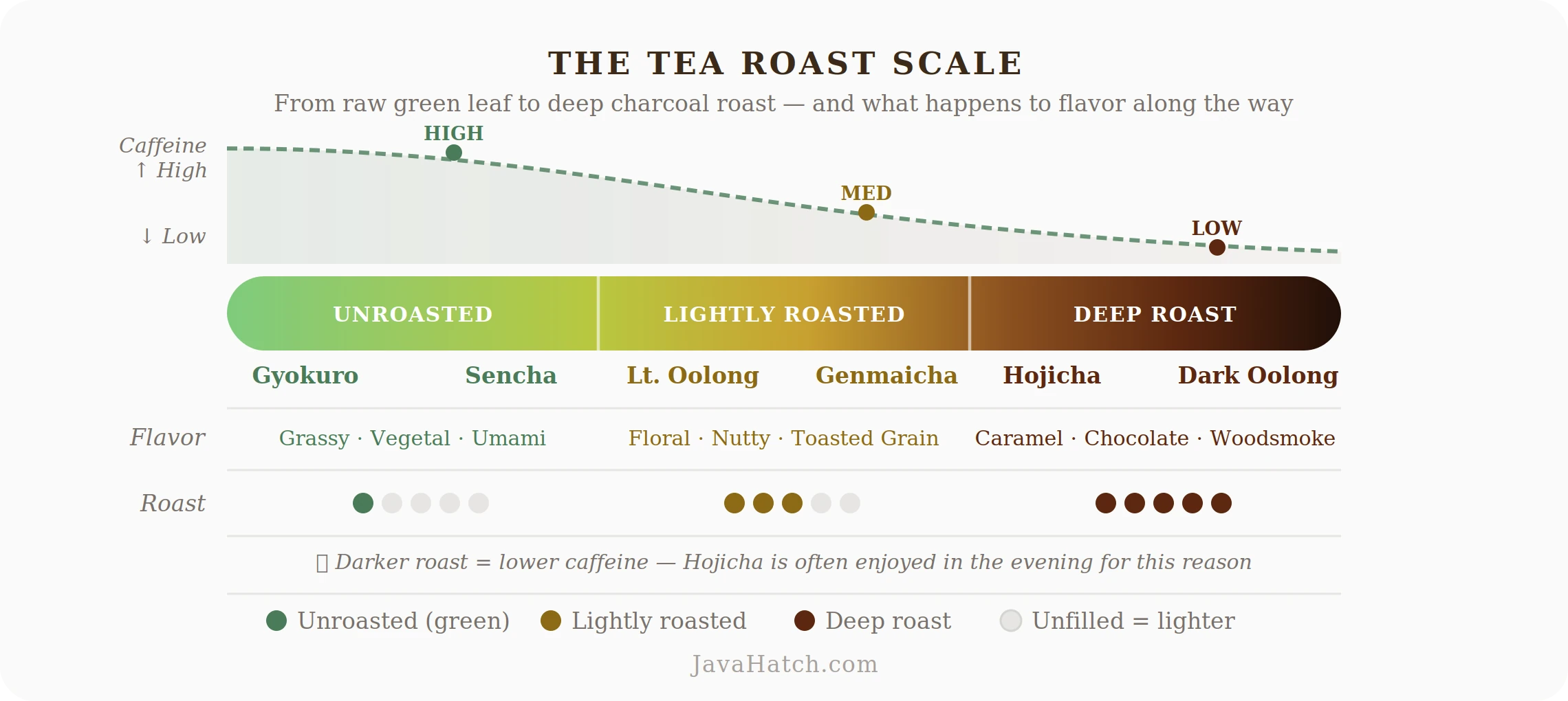
Roasting moves hojicha away from grassy green tea flavors toward toasted notes.
How to Order
Simple version:
"I’ll have a hojicha latte, please."
Hojicha is more common at specialty tea shops and Japanese-inspired cafés. If you don’t see it on the menu, it’s worth asking if they carry hojicha powder.
With customization:
- "Iced hojicha latte with oat milk"
- "Hot hojicha latte, no sugar"
- "Hojicha latte with vanilla"
Customize It
Sweetness
Hojicha has a natural toasty sweetness, so it’s often enjoyed without added sugar. If you prefer a sweeter drink, you can adjust it to taste.
See sweetness options.
Milk
Oat milk pairs well with hojicha because its grain-like sweetness complements the roasted flavor. Whole milk creates a richer texture.
See milk options.
Temperature
- Hot = emphasizes the toasted aroma
- Iced = lighter and more refreshing
Common Confusion
"Is hojicha the same as matcha?"
No—both come from the same plant but are processed differently.
| Feature | Matcha Latte | Hojicha Latte |
|---|---|---|
| Flavor | Grassy, umami, vibrant | Toasty, caramel, earthy |
| Color | Bright green | Deep brown/amber |
| Caffeine (250 ml / ≈8.5 oz) | Higher (≈60–80 mg) | Low (≈15–30 mg) |
"Does hojicha have caffeine?"
Yes, but much less than most teas. A 250 ml (≈8.5 oz) serving typically contains 15–30 mg of caffeine.
"Why is hojicha brown if it is a green tea?"
Roasting changes the leaf color, similar to how roasting darkens coffee beans.
📌 Good to Know
Because hojicha is roasted at high temperatures, much of its caffeine is reduced during processing. A hojicha latte typically contains much less caffeine than a matcha latte or coffee, which is why it’s often chosen for afternoon or evening drinks.
Compare
Compare matcha and hojicha side by side: Matcha Latte vs Hojicha Latte.
Try Next
If you enjoy the roasted, low-caffeine profile, try a matcha latte for a brighter contrast. If you prefer a more spiced flavor, explore a chai latte.