

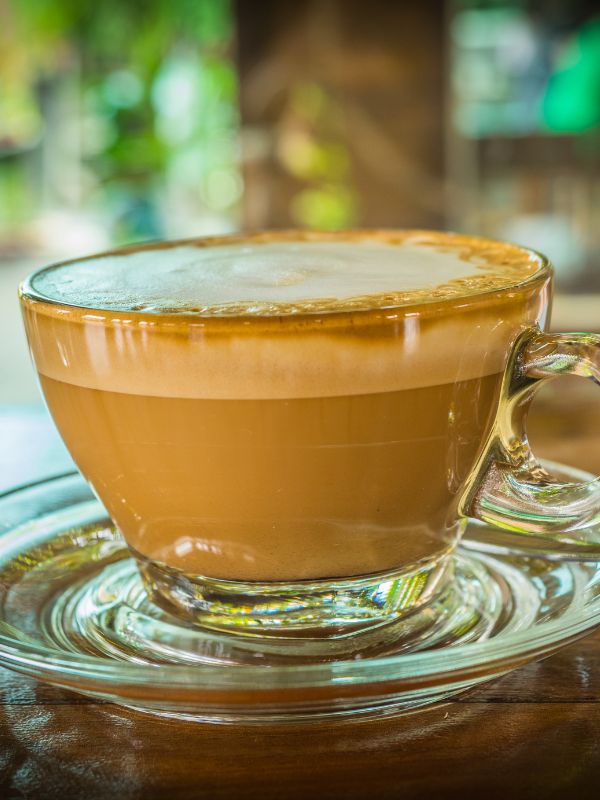
What It Is
A cappuccino is an espresso-based drink made with equal parts espresso, steamed milk, and milk foam. The classic 1:1:1 ratio keeps the espresso, milk, and foam in proportion, with noticeable coffee flavor and a thick, airy foam layer on top.
It is traditionally served in a smaller cup, about 5–6 oz (≈150–180 ml), so the ratio holds together. Larger versions become more milk-forward and resemble a latte.
What It Tastes Like
A cappuccino tastes balanced and coffee-forward, with a soft, airy top layer.
Compared to a latte, it has less liquid milk and more foam, which makes the espresso flavor more noticeable while keeping the texture light. The foam adds volume without weight, so the drink feels lighter than its milk content suggests.
💡 Behind the Cup
A cappuccino is built on the 1:1:1 ratio — equal parts espresso, steamed milk, and milk foam. The three layers — espresso at the bottom, steamed milk in the middle, and a thick foam cap on top — sit in roughly equal proportion.
The milk is textured using a steam wand — an espresso machine nozzle that heats milk — to create a light foam made of tiny, stable air bubbles. This foam changes how the coffee feels, making the drink lighter while allowing the espresso flavor to stand out.
Because there is less liquid milk than in a latte, the coffee remains more pronounced even though both drinks use the same espresso base.
How to Order
Simple version:
"I'll have a cappuccino, please."
Many cafés serve cappuccinos hot by default and may ask for size or milk preference.
With customization:
- "Can I get a cappuccino with skim milk?"
- "I'd like a dry cappuccino." (extra foam, less milk)
- "Wet cappuccino, please." (less foam, more milk)
If you want something similar but iced, many cafés will point you toward an iced latte with extra foam. See the iced latte guide for how the balance changes when served cold.
Customize It
Foam preference (cappuccino types)
| Style | Foam vs. liquid milk | Texture | Espresso flavor |
|---|---|---|---|
| Wet | More milk, less foam | Milkier, fuller | Less pronounced |
| Dry | More foam, less milk | Lighter, airier | More pronounced |
| Bone dry | Almost all foam, minimal milk | Very light, airy | Most pronounced |
A wet cappuccino is closest to a small latte, while a bone dry cappuccino is closer to espresso topped with foam.
Sweetness
Cappuccinos are not sweet by default, but syrups like vanilla or caramel can add sweetness and make the espresso flavor less sharp.
See sweetness options.
Milk
Whole milk produces the smoothest, most stable foam. Oat milk also foams well, while almond or skim milk create lighter, thinner foam.
See milk options.
Common Confusion
"What is a cappuccino?"
A cappuccino is an espresso drink made with equal parts espresso, steamed milk, and milk foam. The 1:1:1 ratio creates a balanced drink with a noticeable coffee flavor and a thick foam layer on top.
"How is a cappuccino different from a latte?"
Cappuccinos contain more foam and less liquid milk, making the coffee flavor feel stronger and the texture lighter. Lattes use more milk and a thinner foam layer, creating a smoother, milkier drink. See the full breakdown of the difference between a cappuccino and a latte.
"How is it different from a flat white?"
Flat whites use a thin layer of microfoam instead of a thick foam cap, creating a smoother, more integrated texture. Cappuccinos feel lighter because of the thicker foam layer.
"What's the difference between dry, wet, and bone dry cappuccinos?"
The terms refer to how much foam vs. liquid milk the drink contains. A wet cappuccino has more milk and less foam (resembling a small latte). A dry cappuccino has more foam and less milk. A bone dry cappuccino is almost entirely foam, with very little liquid milk.
"Why does a cappuccino come in a smaller cup?"
Traditional cappuccinos are served in 5–6 oz (≈150–180 ml) cups because the 1:1:1 balance works best in a compact size. Larger versions often resemble lattes with extra foam, losing the cappuccino's defining structure.
"How much caffeine does a cappuccino have?"
A 5–6 oz (≈150–180 ml) serving typically contains 60–80 mg of caffeine from a single espresso shot, or 120–160 mg if made with a double shot.
📌 Good to Know
Cappuccinos are defined by their foam structure as much as their ingredients. Because foam is mostly air, it increases the volume of the drink without adding much weight. This is why a cappuccino can feel light in your hand while still letting the espresso flavor come through clearly.
🌍 Regional Notes
Italy — Morning drink tradition
In Italy, cappuccinos are typically ordered in the morning. Later in the day, espresso-only drinks are more common.
Australia & New Zealand — Chocolate dusting
Cappuccinos are often served with a light dusting of cocoa powder or chocolate on top.
North America — Larger cup sizes
Traditional cappuccinos are around 5–6 oz (≈150–180 ml), while larger versions at some chains are closer to lattes with extra foam.
Try Next
If you want something creamier with more milk, try a latte. For a smoother texture with less foam and a stronger espresso presence, try a flat white.