

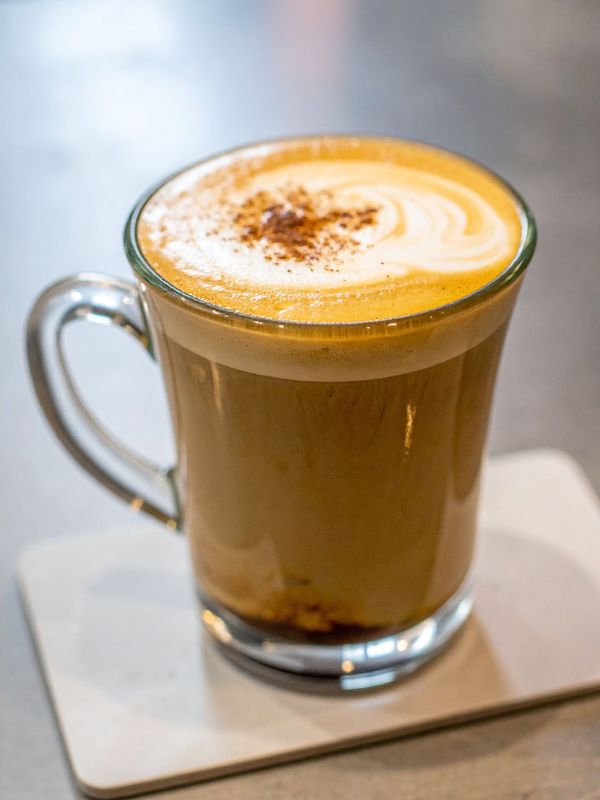
What It Is
A Spanish latte is a sweetened espresso drink made with espresso, steamed milk, and sweetened condensed milk. The condensed milk adds natural sweetness and a richer texture than a standard latte, with no added syrup needed.
What It Tastes Like
A Spanish latte is noticeably sweeter than a standard latte. The sweetness comes from sweetened condensed milk, which blends into the espresso and milk rather than sitting on top like flavored syrup.
The espresso flavor is still present but softer than in a standard latte. The result is a smooth texture where the sweetness is built into the drink rather than added on top.
Iced versions are common and are often served layered.
💡 Behind the Cup
A Spanish latte uses sweetened condensed milk in addition to regular steamed milk. Condensed milk is milk that has had most of its water removed and sugar added, creating a thick, shelf-stable milk concentrate with built-in sweetness.
The typical build:
- Condensed milk poured into the bottom of the cup
- Espresso poured over
- Steamed milk added to fill
The layers often remain visible before stirring, which makes the iced version particularly distinctive in a clear glass.
Where Does the Spanish Latte Come From?
Despite the name, the Spanish latte does not have deep roots in Spanish café culture. The modern Spanish latte is especially common on café menus in parts of Southeast Asia — including Singapore, Malaysia, and the Philippines — and has since appeared in specialty cafés globally.
You may also see it called a condensed milk latte or Singapore latte depending on where you order. The "Spanish" name spread through Asian café culture and stuck, even though the drink is more closely associated with Southeast Asian menus than European ones.
If you order a Spanish latte in Spain, you will likely receive a Café con Leche: equal parts espresso and scalded milk with no added sweetener. To get the condensed-milk version common in modern cafés, look for a Café Bombón instead.
Spanish Latte vs Latte
| Feature | Spanish Latte | Latte |
|---|---|---|
| Sweetness | Sweetened with condensed milk | Typically unsweetened |
| Texture | Creamy, sweetness integrated | Smooth, milk-forward |
| Flavor | Sweetness and coffee are blended together | Milk-forward with distinct espresso flavor |
See a full breakdown of a classic latte, or compare them side by side: Spanish Latte vs Latte.
How to Order
Simple version:
"Can I get a Spanish latte, please?"
Spanish latte is appearing on more café menus. If it is not listed, you can ask:
"Can I get a latte with condensed milk?"
Hot or iced:
Both are common.
In an iced Spanish latte, the condensed milk should be mixed into the hot espresso first so it fully dissolves. If it is added after cold milk or ice, it can settle at the bottom instead of blending into the drink.
Customize It
Condensed Milk Amount
Cafés that offer Spanish lattes often let you adjust how sweet the drink is by changing how much condensed milk is used. If you find it too sweet, ask for less.
Espresso Shots
Adding an extra shot balances the sweetness of the condensed milk if you want the coffee flavor to come through more clearly.
Temperature
The iced version highlights the layered presentation. Hot versions are also common but resemble a traditional latte with added richness. For hot versions, milk is typically steamed to around 140–150°F (60–65°C), which keeps the texture smooth and brings out natural sweetness without overheating the milk.
Milk
Some cafés rely heavily on condensed milk for sweetness and body, while others balance it with steamed milk or oat milk.
See milk options.
Nutrition (Approximate)
A standard 250 ml (8.5 oz) Spanish latte varies by café, but most fall within this range:
| Measure | Amount |
|---|---|
| Calories | ~200–240 |
| Sugar | ~28–32g |
Most of this comes from the sweetened condensed milk, which provides both sweetness and body. A typical 1 oz serving of condensed milk contains about 20–22g of sugar, which makes it the primary driver of both sweetness and total calories in the drink.
Using less condensed milk or choosing a lower-calorie milk can reduce the overall calories, but the majority of the sugar will still come from the condensed milk.
Common Confusion
"Is a Spanish latte just a latte with sugar?"
Not exactly. Condensed milk adds both sweetness and a different texture. It is thicker and richer than simply adding sugar to a latte.
"How sweet is it?"
A Spanish latte contains sugar because sweetened condensed milk is already sweetened. It is noticeably sweeter than an unsweetened latte — roughly similar to adding one or two pumps of syrup.
"Why is it called Spanish?"
The origin of the name is unclear. It does not correspond closely to a traditional Spanish coffee preparation. The name spread through café culture in Southeast Asia and has remained even though the drink is more closely associated with Asian café menus.
"Is it the same as Vietnamese iced coffee?"
They share the condensed milk technique, but Vietnamese iced coffee uses a much stronger robusta coffee base brewed through a phin (feen) filter. A Spanish latte uses espresso, making it lighter in flavor.
For a side-by-side breakdown, see Spanish latte vs Vietnamese iced coffee.
📌 Good to Know
Condensed Milk vs. Standard Syrups
Unlike a Vanilla Latte or similar drinks, a Spanish Latte doesn’t rely on flavored syrups. It uses sweetened condensed milk, which makes the texture thicker and creamier, with a sweetness that feels fully blended into the drink rather than added on top.
Try Next
If you enjoy the condensed milk richness but want a stronger, bolder version, try Vietnamese iced coffee.
If you prefer the same espresso-and-milk base without added sweetness, a classic latte gives you a similar foundation.