

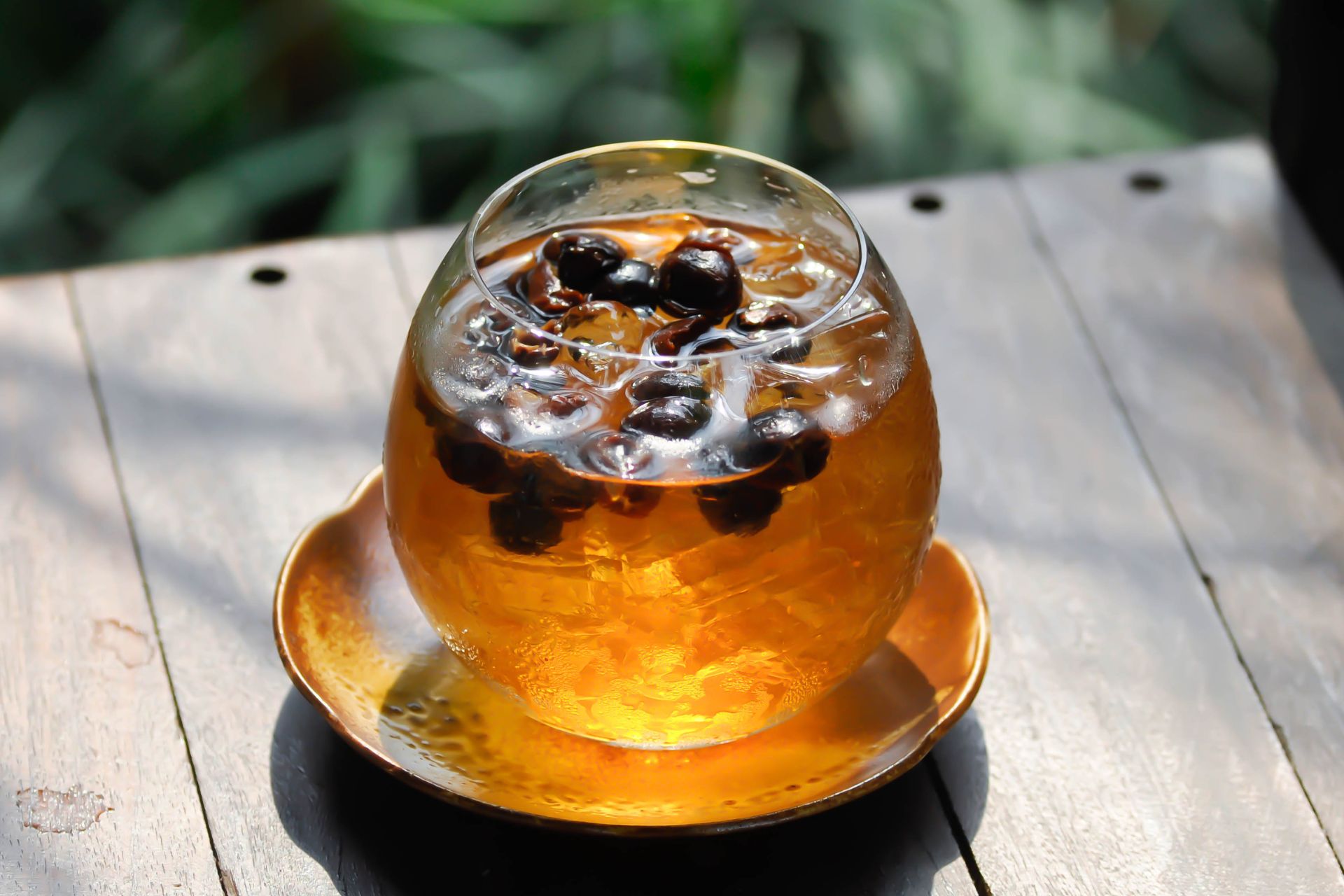
What It Tastes Like
Cascara (kas-KAHR-rah) tea is made from the dried outer fruit of the coffee plant rather than the roasted coffee bean. It has a light body with a naturally sweet, fruit-like flavor.
Despite coming from the coffee plant, cascara does not taste like coffee. And although the fruit is often called a coffee cherry (the fruit surrounding the coffee bean), it does not taste like sweet cherries. Instead, it resembles a mild herbal tea with notes similar to dried fruit such as raisins or dates, along with a slight tang found in some fruit teas.
The color of cascara varies depending on how it is brewed. Some cups appear amber, while others take on a deeper red tone. Longer steeping produces a darker color, while shorter steeping keeps the drink lighter.
💡 Behind the Cup
Coffee grows inside a small fruit known as a coffee cherry. During processing, the fruit is typically removed so the inner seed can be roasted into coffee.
Cascara, meaning “husk” or “peel” in Spanish, refers to the dried skins of that fruit. Brewing these dried skins creates a tea-like drink that has been consumed in coffee-growing regions such as Yemen and Ethiopia.
Some cafés also use cascara as the base for sparkling drinks or cascara sodas.
How to Order
Simple version:
"Can I get a cascara tea?"
Some cafés may list it simply as “cascara,” while others describe it as a coffee-fruit tea.
With customization:
- "Iced cascara, please"
- "Cascara tea, no sweetener"
- "Hot cascara with lemon"
Availability varies, since not all cafés carry cascara.
Customize It
Temperature
Cascara works well both hot and iced. Iced versions often show more pronounced fruit notes.
Sweetness
Many people drink cascara plain because it already has natural sweetness.
Brewing Strength
Longer steeping creates a deeper fruit flavor, while shorter steeping keeps the drink lighter.
Common Confusion
"Is cascara coffee or tea?"
It comes from the coffee plant but is brewed like tea.
"Does cascara have caffeine?"
A 250 ml (≈8.5 oz) serving typically contains ~20–40 mg of caffeine, depending on how it’s brewed.
"Why don’t more cafés serve it?"
Cascara depends on coffee harvesting and processing, so availability can vary by region and supplier.
📌 Good to Know
What makes cascara different from coffee?
Cascara is made from the dried fruit of the coffee plant, not the roasted bean. It uses a part of the plant that is usually removed during processing, which is why it’s sometimes described as an “upcycled” coffee product.
Try Next
If you enjoy the lighter, tea-like profile of cascara, try a cold brew for a smooth coffee experience. If you want another naturally caffeinated brewed drink, try yerba mate.